
What exactly is “Counter-Revolutionary” Roman Catholicism? To answer that question we must begin by defining our terms.
Etymologically, “revolution” comes from the Latin revolvere, which means to “roll back” or to “turn over.” In the 16th century, the word revolt came into use to describe a rebellion against and/or an attempt to overthrow political authority.
The Dispatch
While the French and American Revolutions in the late 1700s are two of the most pivotal moments in the history of Western Civilization, far more consequential uprisings occurred long before the 18th century.
According to St. Thomas Aquinas, on the first day of creation the angel Lucifer declared “non serviam!” — Latin for “I will not serve” — after learning that Christ was to be born a man through the Blessed Virgin Mary. He and one-third of the angels joined together in this first turning against Divine Authority. But St. Michael the Archangel, whom we might call the first “counter-revolutionary,” rose up to wage war upon Lucifer and his followers in order to defend the honor of God.
A second pivotal rebellion occurred when Adam took a bite of the apple in the Garden of Eden. His disobedience resulted in every human being to be conceived with the harmful effects of Original Sin, save Mary, the Mother of Christ.
Perhaps the most significant act of defiance since that fateful day came in the 1500s. Lead by prideful men who, like Lucifer, refused to submit to the Will of God, the so-called Protestant Reformation attacked the Church Christ Himself founded, the consequences of which have lasted to the present day.
The Catholic Counter-Revolution
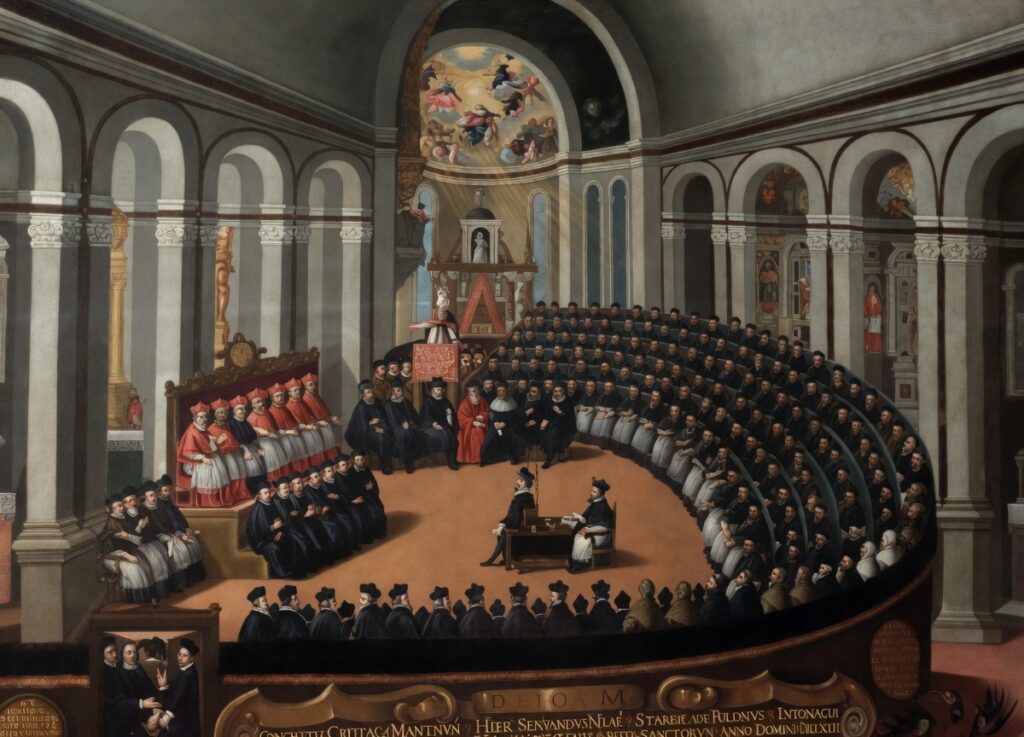
The decades and centuries that followed Martin Luther’s act of defiance came to be known as the Catholic Counter-Reformation. St. John Fisher (1469-1535), St. Ignatius of Loyola (1491-1556), St. Charles Borromeo (1538-1584), and St. John of the Cross (1542-1591) were just a few of the many men who, like St. Michael, rose up to defend the honor of God in the 16th century.
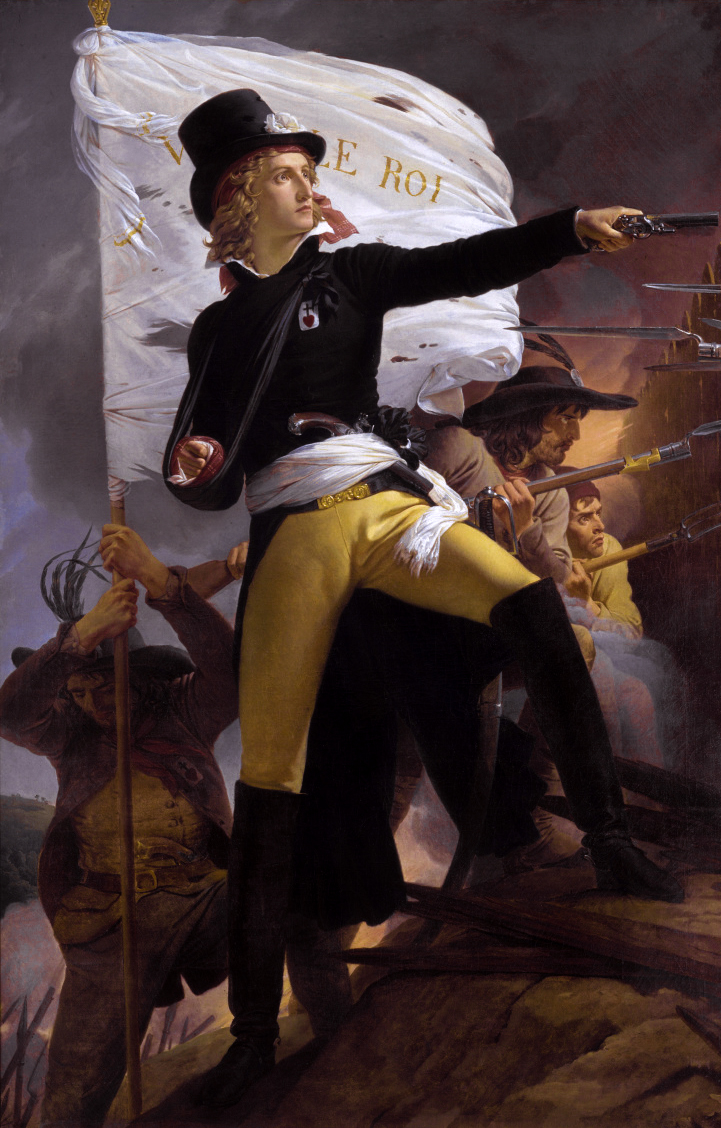
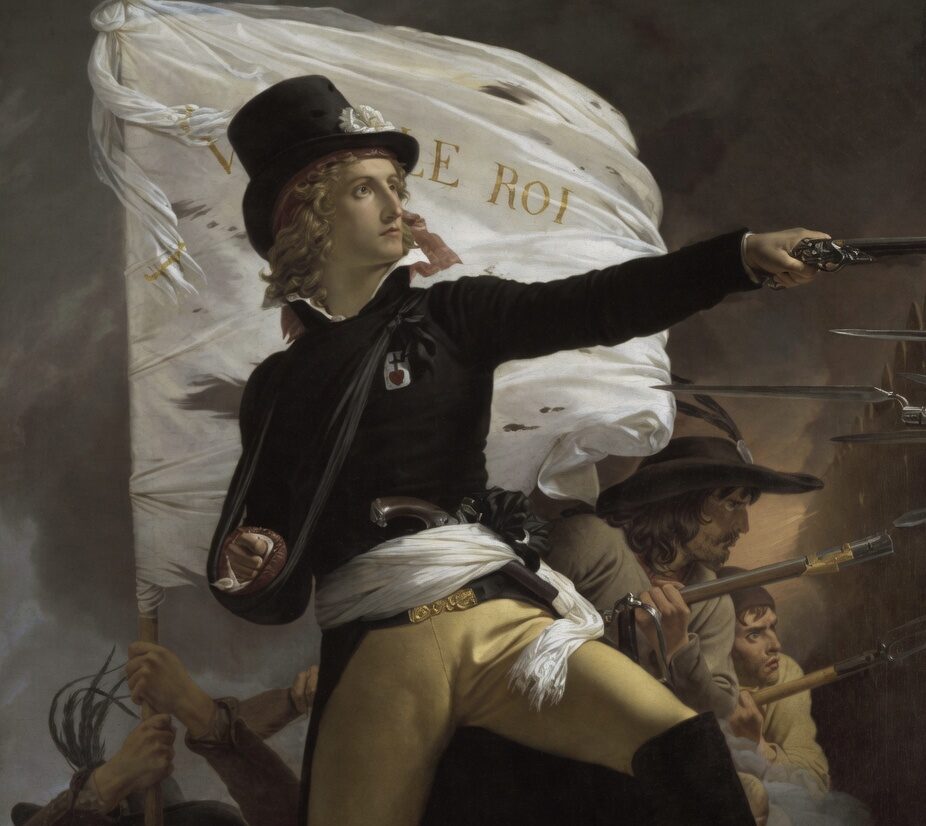
Two centuries later during the French Revolution, the Catholic and Royal Army took its stand in the Vendée region. Lead by 21-year-old Henri du Vergier de La Rochejaquelein, peasants and rural farmers donned a patch of the Sacred Heart and courageously fought for the Kingship of Christ against government forces. For their heroism, they earned a martyrs death while others, including priests, shamefully swore an oath to the secular constitution.
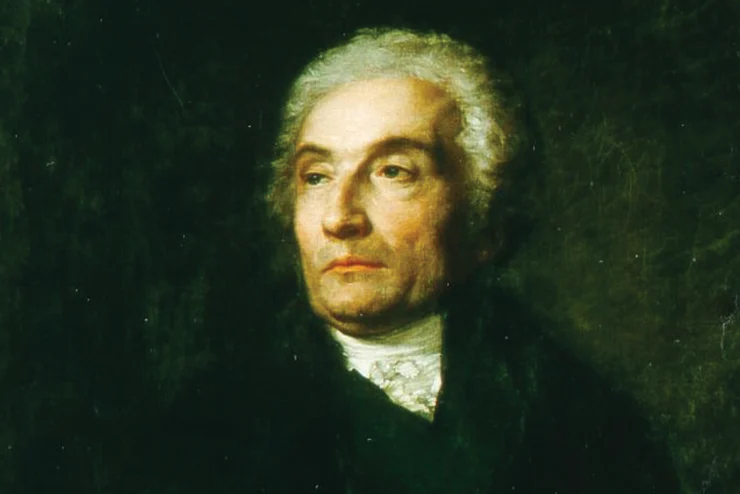
In the 1800s, Catholics in Spain battled liberalizing and socialist forces while Joseph de Maistre (1753-1821), Juan Donoso Cortés (1809-1853), Louis Veuillot (1813-1883), Ecuadorian President Gabriel Garcia Moreno (1821-1875), and Fr. Félix Sardà y Salvany (1844-1916) waged war upon Enlightenment thinkers, as well as Liberal Catholics who wanted the Church to make peace with the modern world.
The prophetic popes of the 18th, 19th, and early 20th centuries did not fail a denounce the growing onslaught of errors. In 1832, Pope Gregory XVI condemned the “great mass of calamities” emanating from “the heretical societies and sects.” He also rebuked appeasement-minded Catholics like Felicité de Lamennais and Henri Lacordaire who foolishly wanted the Church to embrace the principles of the French Revolution.
In his admirable 1864 document the Syllabus of Errors, Pope Pius IX anathematized the notion that “every man is free to embrace and profess that religion which, guided by the light of reason, he shall consider true.” He further condemned the idea that “the Roman Pontiff can, and ought to, himself, and come to terms with progress, liberalism and modern civilization.”
Pius’s successors Leo XIII and St. Pius X re-iterated his magisterial teachings while condemning new heresies such as Americanism and Modernism. “Formal denunciations of liberalism in whole or part, appeared in Pius IX’s Syllabus of Errors (1864), and in Leo XIII’s Immortale Dei (1885), Libertas Praestantissimum (1888), Longinque Oceani (1895), and Testem Benevolentiae (1899),” the former Archbishop of Chicago, Cardinal Francis George (1937-2015), rightly observed in his 2009 book The Difference God Makes.
Early 20th century defenders of the faith
These holy pontiffs were not alone in their defense of the faith. In 1909, Italian priest Msgr. Umberto Begnini founded the Sodalitium Pianum. The group took upon itself the unenviable task of performing a sort of theological root canal on the Church by exposing heterodox clergy who were infiltrating the hierarchy. Its founding charter described its members as “integral Roman Catholics” who were “anti-modernist, anti-liberal, anti-sectarian … [and] counter-revolutionary.”
In Europe, God-fearing men like Portuguese Prime Minister António de Oliveira Salazar (1889-1970), Austrian Chancellor Engelbert Dolfuss (1892-1934), and Spain’s Francisco Franco (1892-1975) came to the aid of the Church by implementing Catholic social teaching in their lands.
Anti-liberal voices in the United States joined in the fight as well. Laypersons Ed Willock and Carol Robinson co-founded Integrity magazine in 1946. “We must make a new synthesis of religion and life,” their flagship editorial declared. “Integral Catholicism … does not mean piety so much as wholeness. It means … a consistency of theory and practice; a unity of public life and private morals; a reconciliation of commercial ethics and religious dogma.”
Fr. Clifford Fenton and Fr. Francis Connell also marched under the “integralist” banner. On the pages of the American Ecclesiastical Review, they thoroughly debunked the arguments of abjuring priests like Fr. John Courtney Murray. “Integralism was nothing else than the contradiction of heretical modernism,” Fenton explained.
The Second Vatican Council was a Modernist coup
This centuries-long battle between those who steadfastly defended the doctrines of the faith against those wanted the Church to adapt its teaching to the modern era came to a head at the Second Vatican Council. It was there where clergy whose ideas had been censured by the Church time and time again launched what can only be described as a coup.
In his 1966 book The Theological Highlights of Vatican II, a young Fr. Joseph Ratzinger claimed that the Church during the 100 years before the Council had become “excessively one-sided” in its anti-Modernist “zeal.” The “cramped thinking” of that period, he alleged, “once so necessary as a line of defense” was actually a “narrow” theological outlook that reflected an “outmoded negative defensiveness.”
Ratzinger would later confess in 1984 that “the problem of the 1960s was to acquire the best expressed values of two centuries of ‘liberal’ culture … and purify [them].” Vatican II’s document Gaudium et Spes was a “counter-Syllabus” that sought to “reconcile the Church with the world as it had become after 1789,” he also acknowledged.
Others who attended the Council bragged about their victory. “The Second Vatican Council marked the end of an epoch … it brought to a close the Constantinian era, the era of ‘Christendom’ … it marks a turning point in the history of the Church,” Cardinal Leo Suenens exclaimed in 1968.
Suenens unsurprisingly described Vatican II as “1789 in the Church,” a reference to the French Revolution.
Post-conciliar Counter-Revolutionaries
After Vatican II came to a close in 1965, new “counter-revolutionaries” emerged. Following in the footsteps of the anti-liberal popes, clergy, and laymen mentioned above, the courageous souls God raised up in the 1970s, 80s, and 90s admirably defended the Catholic faith while also being persecuted not only by former allies but by an occupied Vatican.
French Archbishop Marcel Lefebvre (1905-1991) spoke the hard truth when he said, “liberalism and modernism have entered the Council and the interior of the Church. These are revolutionary ideas, and the Revolution, which once existed in civil society, has passed into the Church …. they have adopted ideas not of the Church, but of the world.”
After Archbishop Lefebvre and Brazilian Bishop Antonio de Castro Mayer consecrated four bishops against the wishes of John Paul II in 1988, the Vatican issued Ecclesia Dei, a document that accused him of not understanding the “living character of Tradition.” It also spoke of Catholics who are “attached” to “some previous liturgical and disciplinary forms of the Latin tradition.”
Then-SSPX Superior General Fr. Franz Schmidberger denounced the practical accord that former Society priests struck with the Vatican. He correctly argued that it is “contrary to the plan of Divine Providence that the Catholic Tradition of the Church be re-integrated into the pluralism of the Conciliar Church, as long as the latter dishonors the Catholic Church and scandalizes its unity and visibility.”
Read more: 5 principles of the Counter-Revolutionary Roman Catholic movement
Integrity Magazine follows in the footsteps of the great counter-revolutionaries mentioned above. It seeks to be a leading voice in the battle for the faith while never compromising with the revolution and its adherents. It strives to help Catholics better understand the Church’s social, political, economic, moral, doctrinal and philosophical teachings. Just as the Catholic counter-revolutionaries opposed the Protestant Reformation, the Enlightenment, the French Revolution, and the Second Vatican Council, so now do we take up the fight of those who for the past 500 years took up the example of St. Michael the Archangel and defended the honor of God while striving to restore all things in Christ.