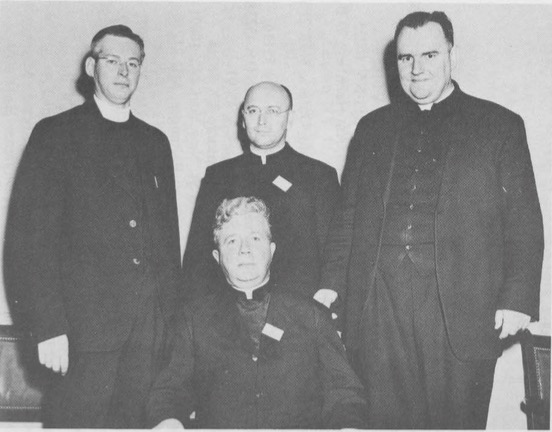
Many Catholics living in the United States have likely never heard of Fr. Joseph Clifford Fenton (1906-1969) That’s a shame.
Born in Springfield, Massachusetts, Fenton excelled at Holy Cross College before obtaining a Licentiate in Sacred Theology in 1930 at the Grand Seminary in Montreal. He pursued further studies at the Angelicum in Rome, where he wrote his doctoral thesis under the direction of the renowned Fr. Reginald Garrigou-Lagrange, the greatest Thomist of the 20th century.
The Dispatch
Fenton’s well-deserved reputation was due to, among other things, his years spent as an educator and the many essays he wrote on while serving as the editor of the American Ecclesiastical Review (AER) from 1944 until 1963.
Fenton was often asked to comment on morality, papal encyclicals, Church-State relations, and similar topics. In brief, he was the crème de la crème when it came to Catholic doctrinal and moral theology pre-Vatican II.
Fr. Fenton visited Rome more than a dozen times in his life. While there, he attended many meetings, conferences, and social events. He wrote in his diary in the 1950s that he was “astonished” by the “attitude of the Americans who live in Rome during the entire year. They have some queer notions on the subject of recent doctrinal pronouncements.”
The “theological situation is very grave,” he added.
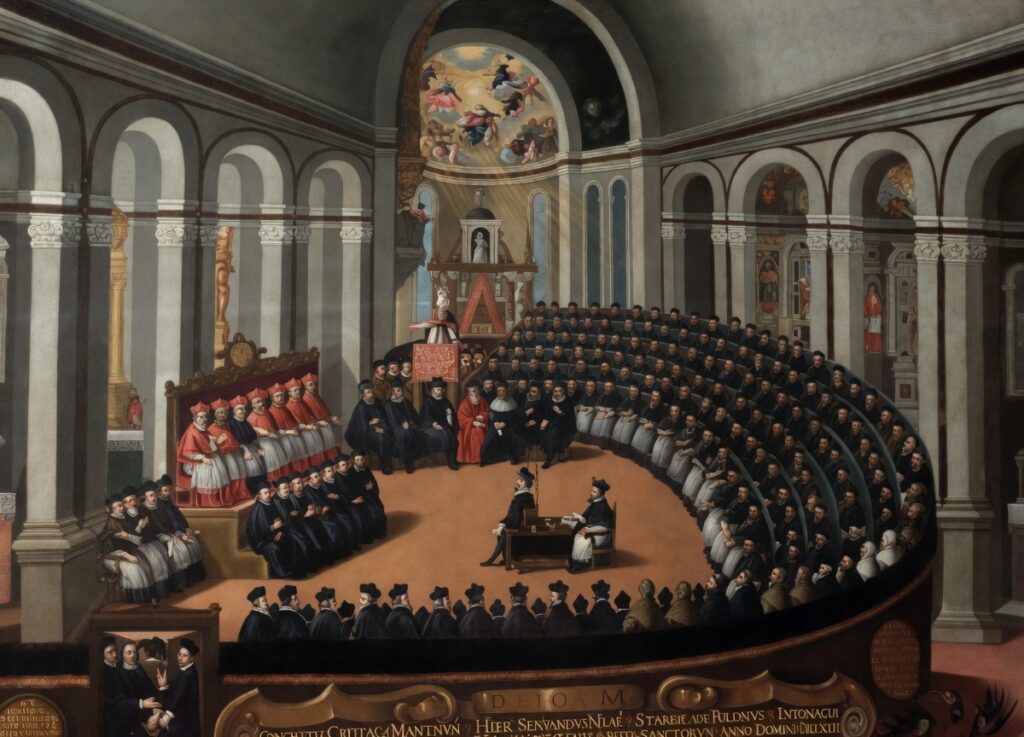
Among other things, Fr. Fenton correctly predicted that the Church was going to be “very badly hurt” by Vatican II, which he attended as an assistant to Cardinal Alfredo Ottaviani, the Secretary of the Holy Office.
Below are some of the many other remarks Fr. Fenton made in his diary while attending the Council. His insights are at once revealing but also disturbing as they throw cold water on the many laudatory remarks made about Vatican II. To read more of his recollections, click here to visit the Novus Ordo Watch website:
“The Church … is being run by men who have no concern whatsoever for the purity or the integrity of the Catholic doctrine.” (Nov. 5, 1960)
“Some of the leaders in the Church appear not to believe [in the Catholic faith].” (Nov. 5, 1960)
“It is a crime that we did not take the Anti-Modernist Oath [at the start of the Council].” (Oct. 9, 1962)
“I had always thought that this council was dangerous. It was started for no sufficient reason.” (Oct. 13, 1962)
“Since the death of St. Pius X the Church has been directed by weak and liberal popes, who have flooded the hierarchy with unworthy and stupid men.” (Oct. 19, 1962)
“As far as I can see the Church is going to be very badly hurt by this council. The opposition between the liberals and the loyal Catholics has been brought out into the open.” (Oct. 27, 1962)
“I never thought that the episcopate was so liberal. This is going to mark the end of the Catholic religion as we have known it.” (Oct. 31, 1962)
“I am afraid that they are going to foist a lot of nonsense on the poor Catholic people.” (Mar. 6, 1963)
“There is nothing erroneous in the material [in the schema on Divine Revelation] we have passed. But there is a great deal that is incomplete and misleading.” (June 4, 1964)
“The part on ecumenism is a joke. It reads like a 19th century text, or a second-rate article in a leftist magazine.” (Oct. 28, 1965)
These and many more of Fr. Fenton’s reflections on the Council will feature prominently in my forthcoming book What Your Priest Isn’t Telling You About Vatican II (St. Peter’s Press) due out later this year.